

U.S. Hoards
Starting with Ancient Civilizations, people have hoarded coins for various reasons. Back then, they were often put in clay pots and buried in walls or in the ground, hidden from marauding invaders and with the hope of retrieving them later. Fast-forward several centuries to the United States. A variety of events that prompted the secreting of currency included the Great Depression and the resulting distrust of banks. Here are four famous – and unusual – coin hoards Littleton was fortunate to purchase, plus one paper money collection.
New York Subway Hoard
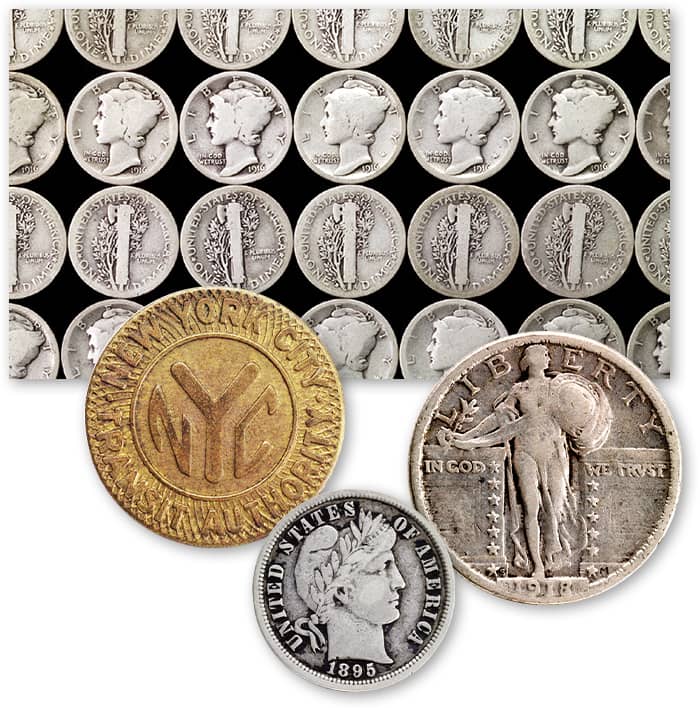
Subway fare collector Morris Moscow and his brother-in-law and part-time coin dealer George Shaw amassed coins used in the New York City subway system from the 1940s through the early 1960s. After Shaw died, Littleton acquired a staggering assortment of early 20th century coins, including 166 1942-41 overdate Mercury dimes; 41 1916-D Mercury dimes; 25 complete sets of Barber dimes; 29 1918-19-D overdates of Buffalo nickels; 24 complete sets of Barber quarters, and 20 1913-S Barber quarters. This hoard was found in a bank vault in the early 1990s.
Vermont Yankee Hoard
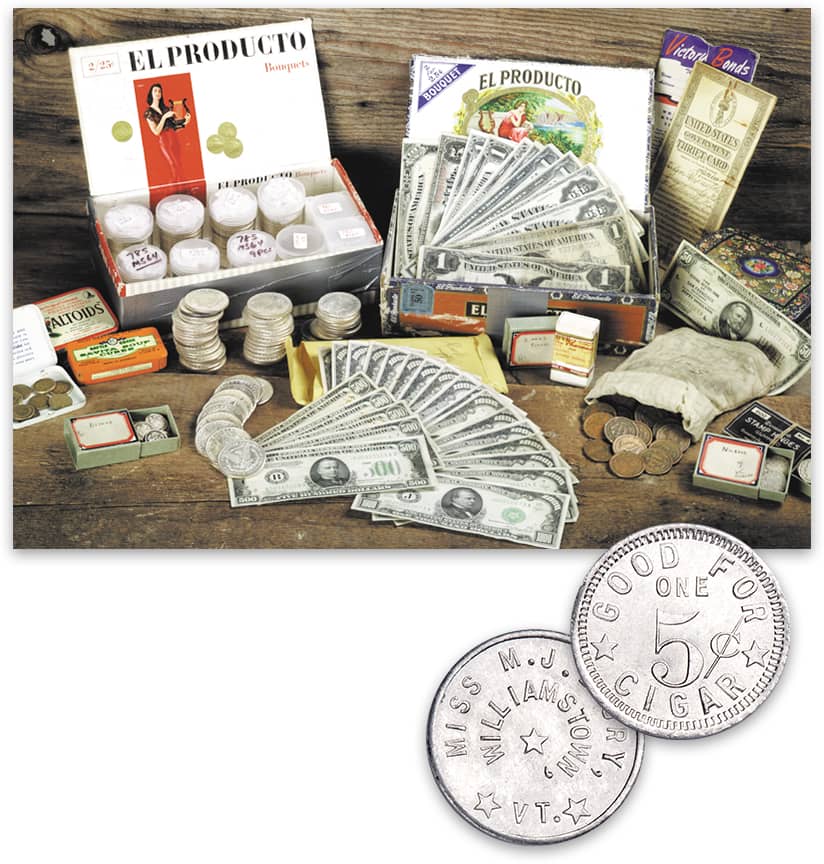
Living in rural Vermont, Alexander and Imogene Miller appeared to be poor. Alexander still rode a 1903 bicycle to town and Imogene wore plastic bags for a raincoat. Yet, after their deaths, an estimated $3 million fortune was found on their farm. It included gold bars, silver ingots, stocks, Federal Reserve Notes, and in old cigar boxes, dozens of Morgan dollars, some still in Choice Uncirculated condition. In 1996, Littleton purchased the first-year Uncirculated 1878-S Morgans, the seldom-seen $500 and $1,000 Federal Reserve Notes, and the previously unknown Miss M.J. Drury token “good for one 5¢ cigar.”
Midwest MegaHoard
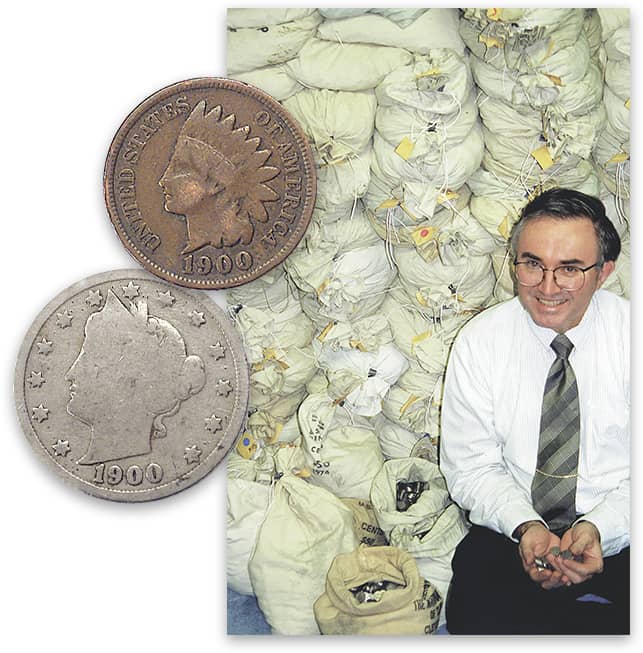
Bringing new meaning to “if these walls could talk,” in 1998, Littleton bought a coin hoard stashed inside the walls of a house of a recently deceased grocery store owner. Filling canvas sacks and 55-gallon drums, the coins were eventually estimated to weigh 7.6 tons and had not been seen in circulation since the 1950s. In the cache were 1.7 million Indian Head cents.
Big Sky Hoard
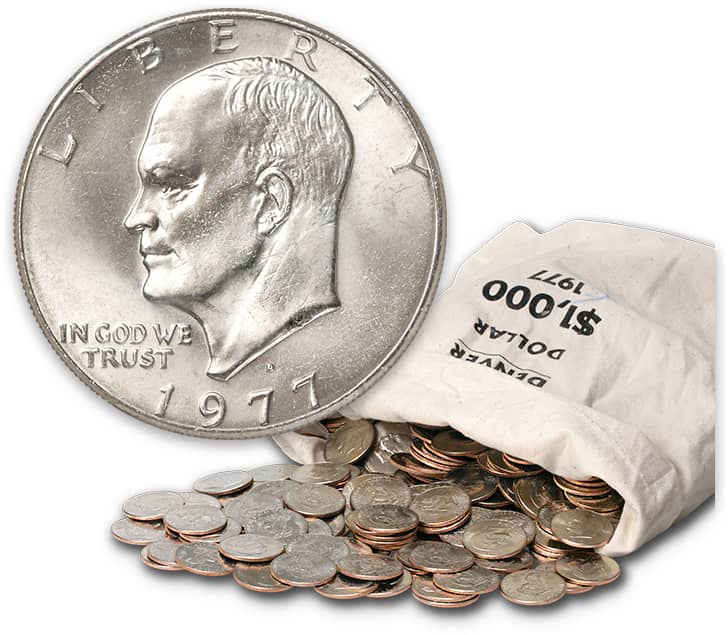
Soon after the 1971-1978 Eisenhower dollars series came to an end, a prominent Montana family quietly put away 223,000 of the last large-size dollar series struck at the U.S. Mint in Denver. For the next 30 years, most of the dollars remained undisturbed in original mint-sewn bags in a basement bank vault. In Uncirculated condition, this group was spared the nicks that sometimes occur when coins are transferred from a Federal Reserve Bank to a local bank. Littleton Coin purchased the hoard in 2011.
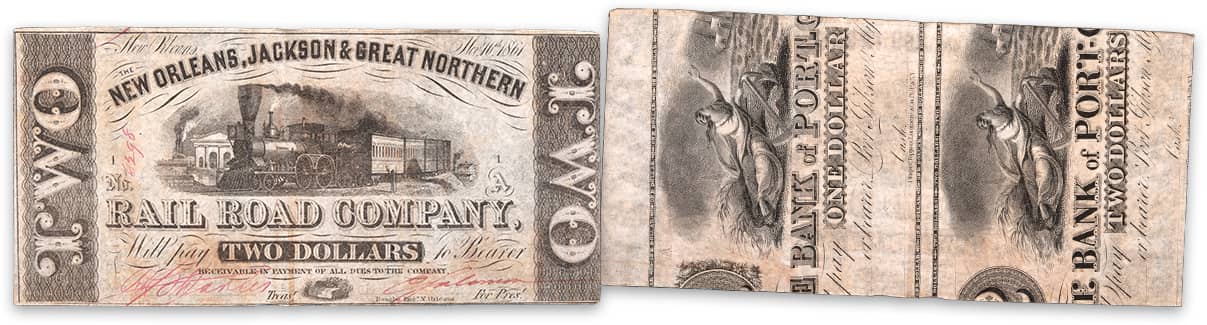
Private Paper Money Collections
Thanks to a special purchase in 2018, Littleton acquired an outstanding collection of 1861 $2 Notes in possession of one family for over 150 years – all in Crisp Unused condition! Due to a severe Civil War money shortage, many southern states, cities and businesses printed their own currency. Because of a paper shortage, many of the notes in this private collection were produced on currency stock already printed on one side for an earlier financial institution.
Do you have a collection to sell? Click here.
- Read next: Quick Coin Grading Guide
- Previous: Fellow Coin Collectors
- Back to How To Collect Coins
