

Top 4 FAQs
Below are the Top 4 Frequently Asked Questions about coin collecting. You can find answers to more FAQs in our Coin Collecting Learn Center.
When were coins first used?
Archaeological research suggests Ancient Civilizations in Lydia and China were using metal coins as early as 700 B.C.
What were the first coins used in America?
The Massachusetts Bay Colony issued the earliest silver coins in 1652: the New England silver Threepence, Sixpence and Shilling, followed by the Willow Tree and Pine Tree coins. The dominate foreign coin to circulate in the colonies during the 17th and 18th centuries was the Spanish silver real.
When did coin collecting attract popular attention?
Philadelphia piano maker Joseph J. Mickley’s search for a 1799 Draped Bust Large Cent struck the year he was born is acknowledged as the formal start of collecting circulating U.S. coins. He wasn’t alone. By 1858, avid coin collectors founded the American Numismatic Society; Mickley was the first president.
What makes a coin valuable?
Supply, demand and condition determine value. Coins struck with precious metals have a dual value – collector merit and intrinsic metal worth.
Four more factors that affect value:
- limited mintage
- estimated amount of coins that survived historic melts
- errors in the minting process
- age and scarcity
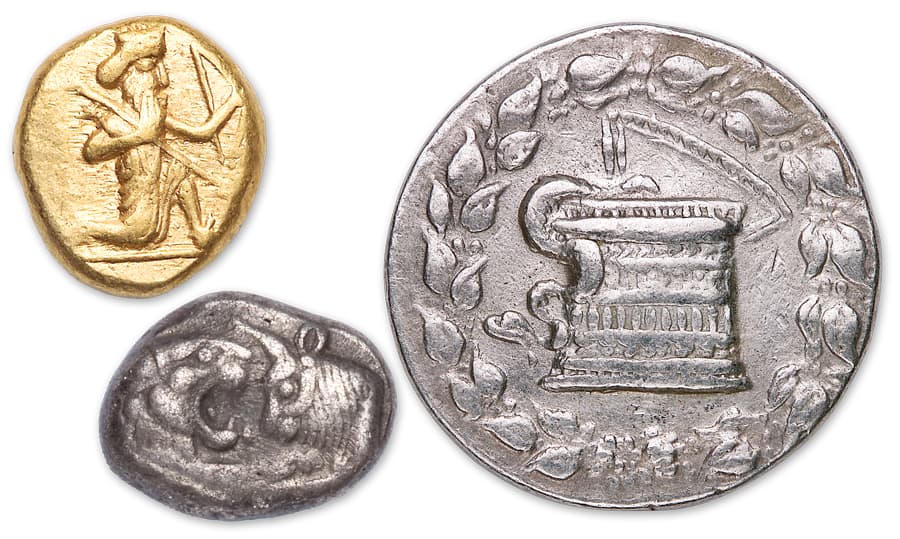
Ancient Lydian coinage
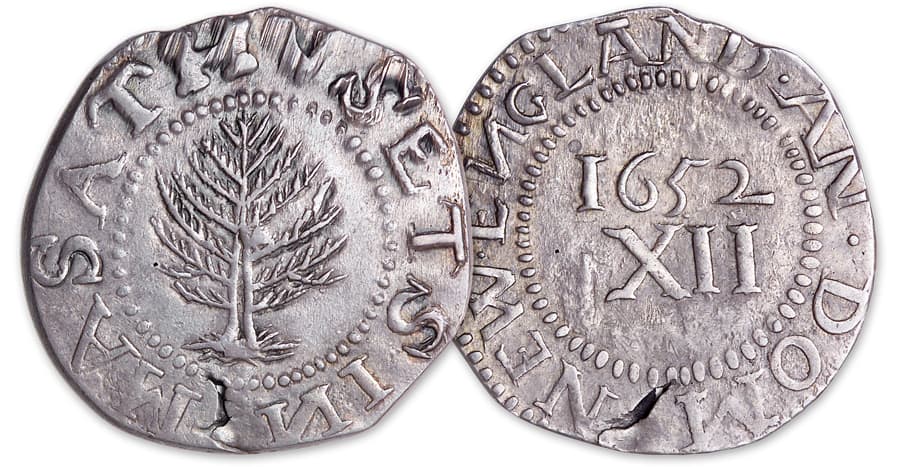
1652 Pine Tree Shilling

Spanish Real

Draped Bust Large Cent
- Read next: U.S. Coin Features
- Previous: Littleton's Standards
- Back to How To Collect Coins
